
Chevy refers to the GM small-block V8 as the “engine that propelled the muscle car movement,” and for good reason. Today, this engine is found under the hood of everything from Corvettes and Cadillacs to heavy-duty Chevy and GMC pickup trucks.
From the 1955 Turbo-Fire to today’s direct-injected LT engines, each generation of small-block has pushed engineering forward. But no era transformed the platform more than the rise of GM LS engines—a family that redefined power, packaging, and reliability for both modern performance cars and the restomod world.
For builders, enthusiasts, and anyone asking “what is an LS engine?”, this guide offers a complete, high-authority breakdown of LS engine generations, types of LS engines, and the evolution of the GM LS V8 engine—all through the lens of premium restomod applications.
Here’s a look at how the GM small-block V8 engine evolved from the 195-horsepower Turbo-Fire V8 in 1955 to today’s high-powered LT family of engines capable of up to 755 horsepower in a production vehicle.
Early GM Small-Block V8 History (1955–2002)
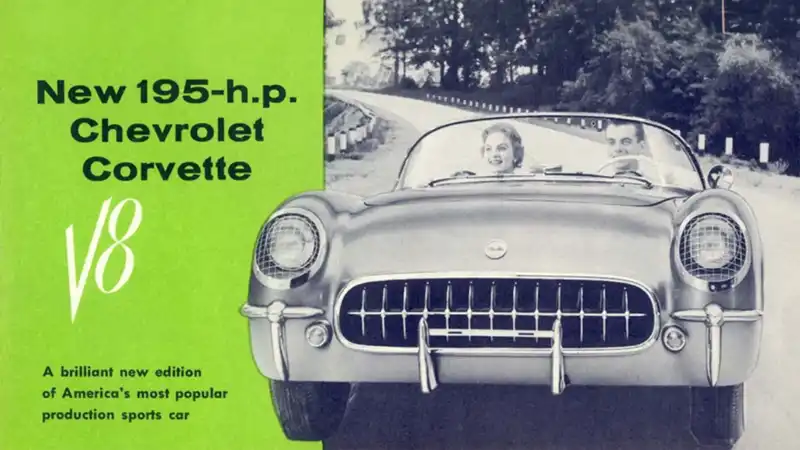 GM’s early small-block era built the foundation for American V8 performance.
Throughout the late 1950s and 1960s, the small-block V8 grew in displacement and reputation. Engines such as the 283, 327, and later the 350 cubic-inch variants became synonymous with American performance. The largest version of GM’s earlier small-block V8 was the 400-cubic-inch V8, introduced in 1970.
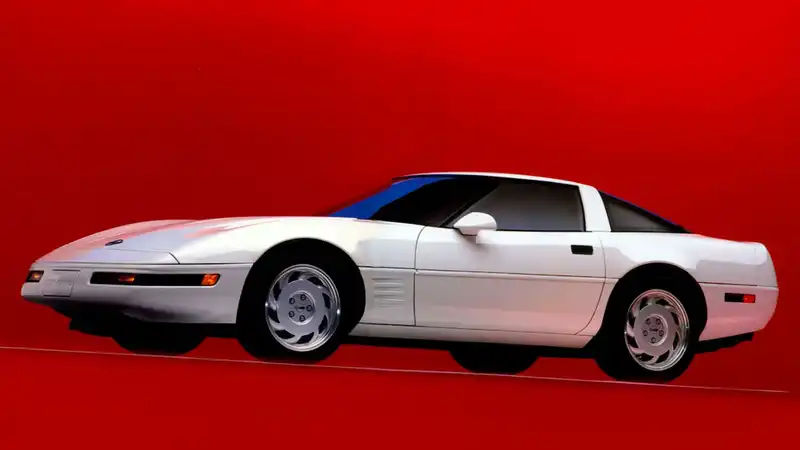 The Gen II modernized the small-block with reverse cooling, higher compression, and swap-friendly design.
Introduced on the 1992 C4 Corvette, GM’s Gen II small-block carried over many design elements of the original engine, but it upgraded the engine block and cylinder heads with a “reverse cooling” system that allowed for higher compression ratios and increased power output. This engine retains the bolt patterns for the bell housing and engine mounts, which is another element that makes this engine perfect for swaps.
The LS Engine Arrives: Gen III Small-Block V8 (1997–2004)
By the mid-1990s, GM faced a clear challenge: evolve the small-block or replace it entirely. The solution came in 1997 with the introduction of the Gen III small-block V8, widely known as the GM LS V8 engine family.
GM LS engines retained elements such as the pushrod design, bore spacing, and bell housing bolt pattern from the early blocks, but the Gen III small-block V8 was a completely new engine design. Launched on the C5 Corvette, the LS V8 featured six-bolt main bearing caps, aluminum construction, and coil-near-plug ignition.
These changes dramatically improved strength, reliability, and efficiency. The GM LS engine delivered modern performance while maintaining compact dimensions and relatively low weight—key advantages over larger overhead-cam V8 competitors. With approximately 350 horsepower in factory trim, the LS1 immediately proved that pushrod engines were far from obsolete.
This era sets the groundwork for LS engine generations and long-term scalability. Truck-based iron-block variants offered extreme durability, while high-performance versions demonstrated exceptional airflow and RPM stability. The LS engine quickly became a modular ecosystem rather than a single engine design.
Gen IV LS Engines: Performance Meets Modern Technology (2005–2013)
In 2005, another new generation of the Chevy Corvette brought with it another generation of the GM small-block V8. The Gen IV LS engines refined the platform further by incorporating electronic and mechanical advancements without compromising performance. Drive-by-wire throttle control became standard, variable valve timing appeared on select models, and Active Fuel Management enabled cylinder deactivation to improve fuel economy.
Despite added complexity, the GM LS engine family reached new performance highs during this era. The naturally aspirated LS3 became one of the most respected performance engines of its time, offering high horsepower with factory reliability. The LS7 represented the pinnacle of pushrod engineering, combining large displacement with lightweight internals and dry-sump lubrication. At the extreme end, the supercharged LS9 proved the LS architecture could deliver supercar-level output while maintaining everyday usability, as displayed in the 638-horsepower C6 Corvette ZR1.
Gen V Small-Block V8: The LT Engine Era (2014–Present)
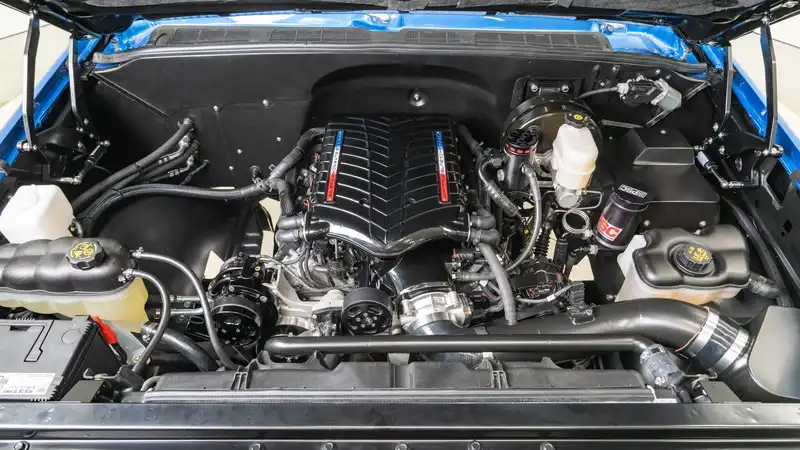 The Gen V LT era brought direct injection, higher compression, and big power—modernizing the small-block while keeping its pushrod roots.
Engines like the LT1 continued the tradition of strong naturally aspirated performance, while the supercharged LT4 pushed factory horsepower to unprecedented levels. Even with advancements in turbocharging and electrification, the Gen V small-block remains competitive due to its compact size, torque-rich powerband, and structural efficiency. While other OEMs have switched to OHC engines, GM’s LS/LT small-block V8 still uses a pushrod design.
Restomod Applications: Why LS Engines are Everywhere
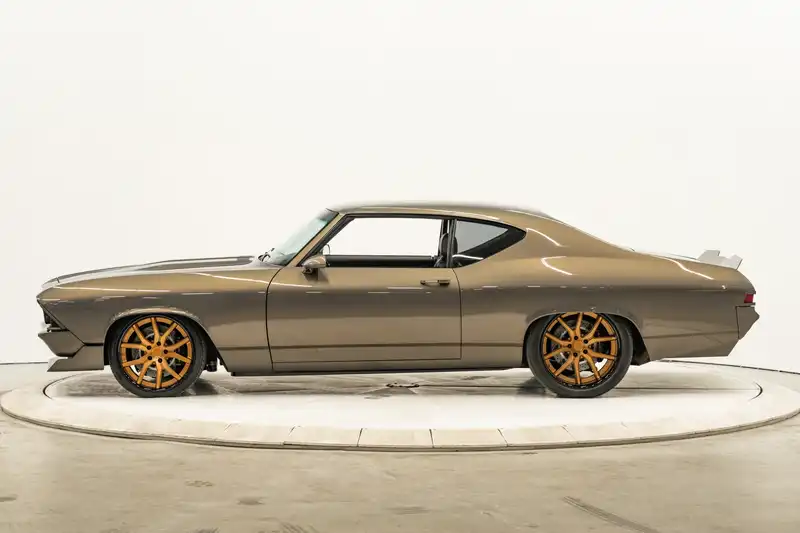 The LS revolutionized restomods with its size, power, and massive aftermarket—making it the go-to swap engine for nearly any build.
It is the most commonly swapped V8 engine in the world, prized for its compact dimensions, extensive aftermarket support, and exceptional power potential. From drag racing and drifting to off-road builds and street cars, the LS engine has become a universal solution for affordable, reliable performance. Today, you can find GM small-block engine swaps in just about any type of vehicle including Jeeps, Jaguars, Mazda Miatas, and even (gasp!) Shelby Cobras!
The LT vs LS engine debate is typically centered on cost, technology, and ease of installation. Early small blocks and LS engines tend to be the engine of choice for DIY restomod builds for the cost and simplicity, while the later LT version is popular among high-end restomod builders such as Velocity. With both LS and LT engines powering modern restomods, the natural question becomes: which platform is better?
LS vs. LT Engines: Key Differences
Understanding specs, technology & swap considerations
Enthusiasts frequently search for the difference between LS and LT engines, and the truth is that both platforms have strengths depending on the build.
LS Advantages:
- Lower cost
- Easier wiring & tuning
- Massive aftermarket support
- More compatible with older vehicles
- Ideal for budget-friendly or DIY restomods
LT Advantages:
- Direct injection = higher efficiency
- More advanced combustion design
- Factory power levels often exceed LS equivalents
- Best choice for high-end restomods and modern builds
Quick comparison of LS vs LT engine specs:
- Fuel delivery: LS = port injection, LT = direct injection
- Compression: LS ~10:1, LT often 11.5+:1
- Electronics: LT systems are more advanced and more complex
- Power potential: Both platforms support huge aftermarket horsepower
GM Small-Block V8 Engine Evolution
The evolution of the GM LS engines and GM small-block V8 represents one of the most influential chapters in automotive performance history. From early small-blocks to LS1, LS2, LS3, LS7, and the advanced LT1/LT4/LT5 lineup, each generation delivers improvements in power, efficiency, and engineering.
Whether comparing LT vs. LS engine options, researching the history of LS engines, or evaluating types of LS engines for a build, one thing is clear: GM’s small-block architecture remains one of the most adaptable and respected platforms in the automotive world, especially in high-end restomod applications where reliability, performance, and packaging matter most.
Leave a Comment
This policy contains information about your privacy. By posting, you are declaring that you understand this policy:
This policy is subject to change at any time and without notice.
These terms and conditions contain rules about posting comments. By submitting a comment, you agree with these rules:
Failure to comply with these rules may result in being banned from submitting further comments.
These terms and conditions are subject to change at any time and without notice.
Comments