
On August 11th, 1965, Ford changed the automotive landscape by unveiling a new kind of machine: the Bronco. Billed as an all-purpose, go-anywhere vehicle, the classic Ford Bronco would redefine how Americans drove, explored, and chased adventure, cementing its place in automotive history.
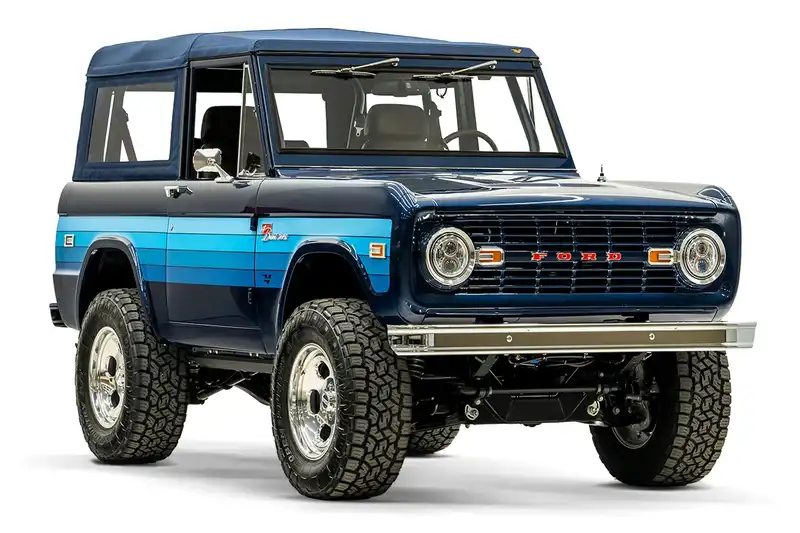
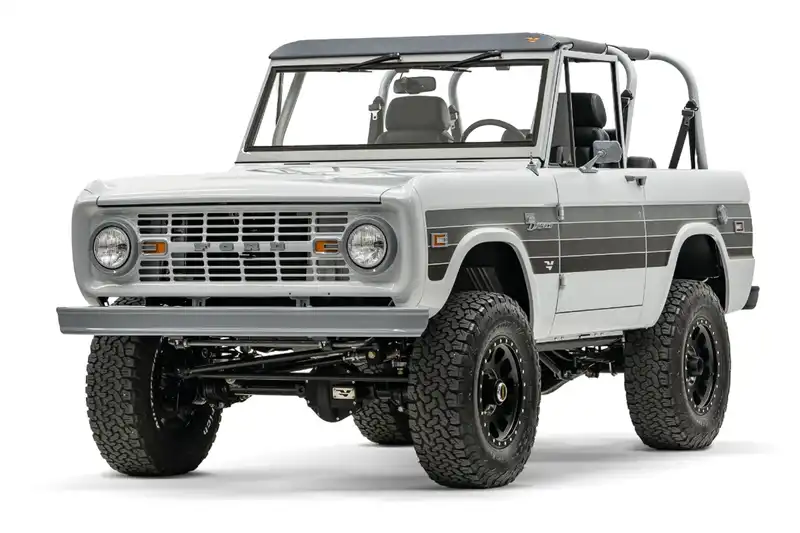
Sixty years and six generations later, the Bronco remains an icon, but the first-generation “early Ford Bronco” stands as the crown jewel. With its clean lines, rugged stance, and unmatched versatility, it has become arguably the most desirable and collectible classic truck/SUV of the last two decades. Today, those same trucks that once bounced along cattle pastures and forded backcountry streams are crossing auction blocks for six-figure sums, proof that the Bronco’s appeal has only deepened with time
A Bold Beginning
Designed under the guidance of Ford product manager Donald Frey and engineer Paul G. Axelrad, the Bronco was created to compete directly with the Jeep CJ and International Harvester Scout. What made the Bronco stand out from the beginning was its ability to serve as a practical utility vehicle during the week, a rugged, off-road adventure machine on the weekends, and a functional farm tool when needed.
Ford’s original debut press materials described the Bronco as “a completely new line of four-wheel-drive vehicles combining the best of passenger car comfort and roadability with the stamina and performance of a true off-road vehicle.” This was not a retooled pickup or a stripped-down family wagon—it was designed from the ground up to be equally at home on highways, ranch roads, and remote mountain passes.
The first Bronco rode on a 92-inch wheelbase, wearing a boxy, purposeful body designed for durability and excellent visibility. This body's short overhangs and high ground clearance made it unstoppable off-road, while its coil-spring front suspension—rare for a 4x4 at the time—offered a smoother ride on pavement than its Jeep and Scout rivals. Three body styles were available:
- Roadster – Open-air simplicity for maximum sun and scenery.
- Half-Cab Pickup – A compact, nimble workhorse.
- Wagon – A full-enclosed design with a removable steel roof for versatility.
1970s: Growth and Muscle
By the early ’70s, the Bronco had become a fixture on ranches, beaches, and trails. In 1973, Ford added the 302-cubic-inch V8, giving it the grunt to pull trailers and power through deep mud. The Bronco also proved itself in competition, with notable victories in the Baja 1000 that cemented its reputation for toughness.
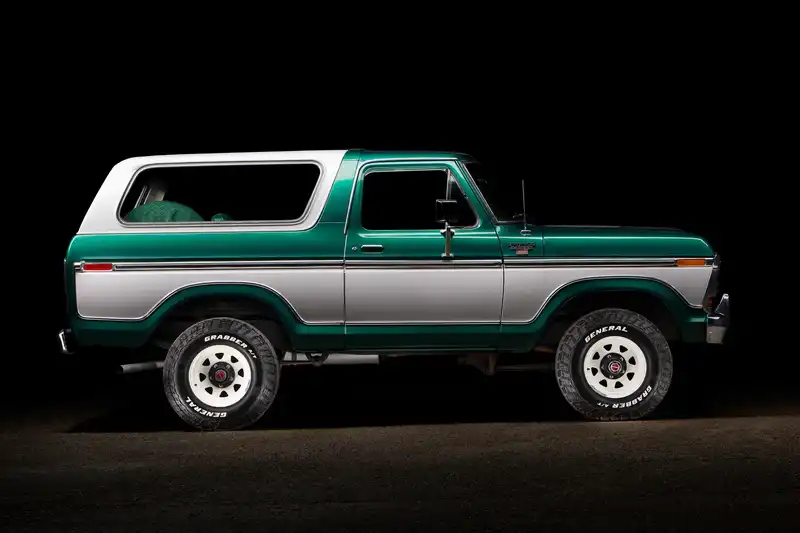 After the oil embargo and other economic delays, the second-generation Bronco finally arrived in 1978 with a bigger footprint based on Ford’s F-Series trucks. These big-body Broncos bridged the gap between rugged workhorse and family adventure vehicle, and were more closely aligned with larger rivals such as the Chevy K5 Blazer, IH Scout II, Dodge Ramcharger, and Jeep Cherokee.
1980–1996: Refinement and Popularity
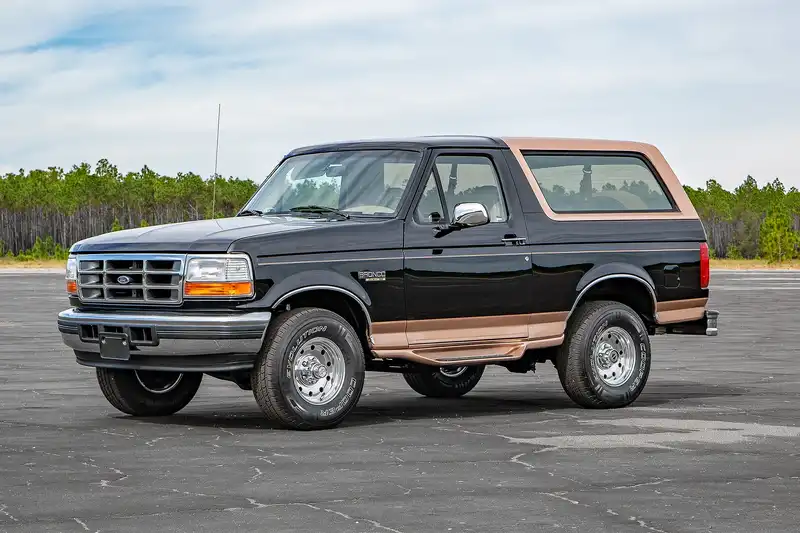 Three more generations followed, each modernizing the Bronco while keeping its essential mix of utility and fun. The 1980 redesign brought lighter construction and better fuel economy, while 1987’s update added aerodynamic styling and improved safety features. Engines ranged from a 4.9-liter inline-six to big V8s, ensuring plenty of power for towing, trail work, or highway cruising.
By its last year of original production on June 12, 1996, the Bronco had cemented its place as one of America’s most recognizable SUVs, appearing in movies, TV shows, countless family vacation albums, and one very infamous low-speed car chase.
The Hiatus and the Return
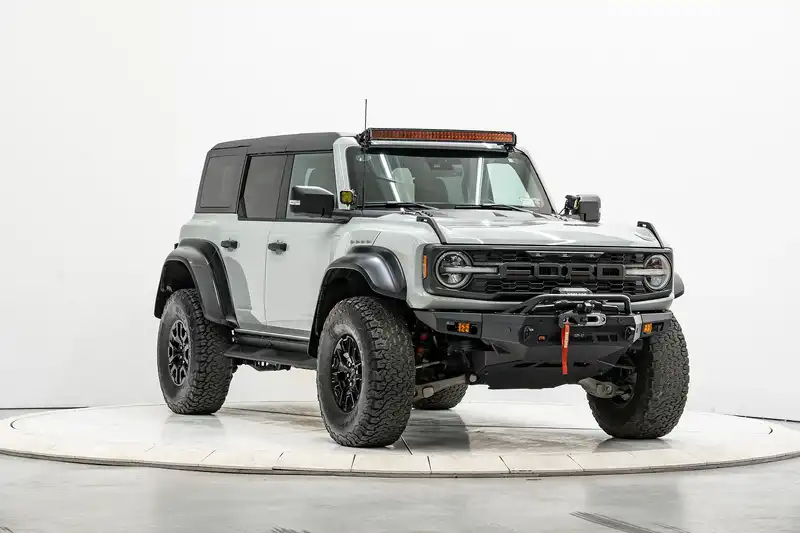 For 25 years, Ford enthusiasts kept the Bronco’s flame alive through restorations, club meets, and trail rides. Then, on June 14, 2021, the Bronco name returned to showrooms with a modern, trail-ready design inspired by the 1965 original. The sixth-generation Bronco drew heavily on first-gen design cues—round headlights, flat fenders, and upright proportions—while adding cutting-edge off-road tech, turbocharged powerplants, and removable doors and roof panels.
From Old-School Adventure to New-School Collectibility
The magic of the Bronco is that it bridges generations of drivers. For those who grew up in the 1960s and ’70s, it’s a symbol of wide-open spaces and carefree road trips. For younger enthusiasts, it’s a gateway to a lifestyle—weekends on trails, surfboards strapped to the roof, and a feeling that any dirt road could lead to something amazing.
And while the new Bronco delivers modern capability, the market for first-generation Broncos has exploded. Once affordable farm trucks, well-restored early Broncos now command collector-level prices, often exceeding $100,000 for pristine examples. Rare trims and original-condition survivors can fetch far more.
The Velocity Touch
Leave a Comment
This policy contains information about your privacy. By posting, you are declaring that you understand this policy:
This policy is subject to change at any time and without notice.
These terms and conditions contain rules about posting comments. By submitting a comment, you agree with these rules:
Failure to comply with these rules may result in being banned from submitting further comments.
These terms and conditions are subject to change at any time and without notice.
Comments