
Classic trucks were never engineered for the demands of modern drivers and traffic conditions. Today’s drivers expect peak comfort, yet many old trucks didn’t even come with A/C—let alone systems capable of supporting today’s power upgrades. Velocity re-engineers classic trucks from the ground up, incorporating new classic truck cooling systems and fully modern classic truck air conditioning designed for real-world performance.
This article explains the mechanics of keeping a vintage vehicle temperature-stable and answers the essential question every restomod owner asks: how do you keep a restomod running cool?
Why Classic Truck Cooling Systems Matter for Reliable Restomod Performance
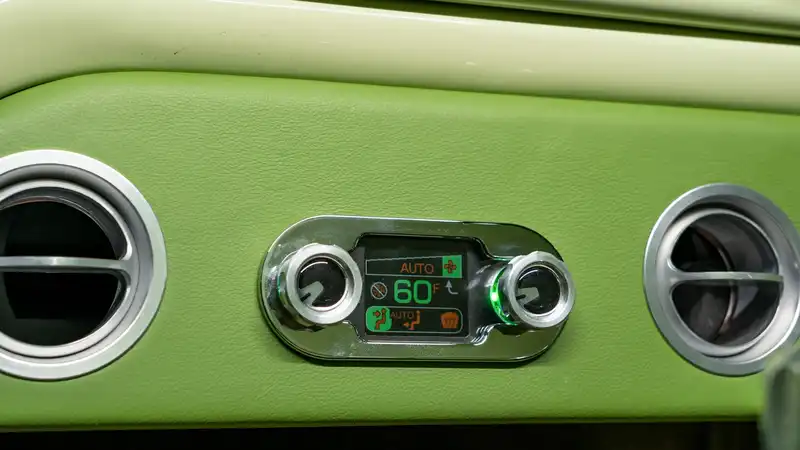 Reliable restomod performance starts with an engineered cooling system built to manage modern heat and maintain stable temperatures.
The key is approaching the vehicle as an integrated unit. When a properly sized radiator, balanced airflow, and a high-flow water pump work together, the truck engine cooling system can maintain stable temperatures. The secret isn’t just about using better parts; it is about engineering a modernized strategy built to handle the demands of today’s roads.
Modern Cooling Solutions and Upgrades
Most builders now rely on new classic truck cooling systems designed specifically for restomods. Upgrading to aluminum classic truck radiators improves temperature control thanks to superior heat dissipation compared to stock units.
For trucks using A/C, a well-matched condenser is essential. While the compressor mechanics are similar to classic car air conditioning, effective classic truck air conditioning requires specific component matching to handle the larger internal volume of the cab. Therefore, the truck engine cooling system must be treated as a cohesive ecosystem rather than a collection of separate parts.
Airflow, Radiators, and Fans: Key Factors
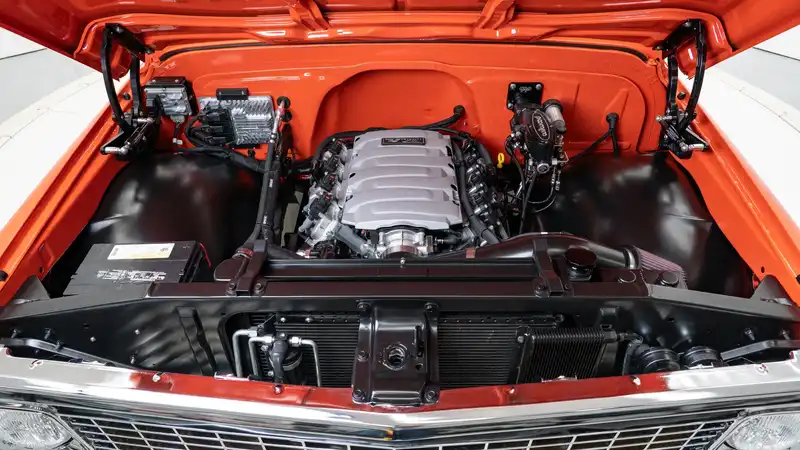 Airflow, fans, and proper sensor placement are essential for an efficient classic truck cooling system.
Mechanical fans shine at highway speed, while electric fans are crucial for A/C-equipped trucks in traffic. Sensor placement matters too; locating a sensor in the wrong passage can compromise the entire truck cooling system.
Cooling Considerations for Traffic and Heat
Restomods running classic truck air conditioning experience additional heat load, especially during low-speed driving. At idle, airflow is entirely dependent on electric fans. On the highway, airflow increases, but long grades or desert climates can push a system to its limits.
Real-world examples show distinct temperature spikes when towing or running A/C in extreme heat. The best classic truck cooling systems are designed to handle these conditions—not just casual cruising—ensuring the engine stays within a safe operating range.
Common Installation Mistakes That Lead to Overheating
Many overheating issues stem from installation errors rather than poor-quality parts. Every component must be installed as a complete system. A common error is assuming classic car air conditioning rules apply universally to trucks, leading to undersized components. Other mistakes include:
- Using undersized radiators for classic truck air conditioning builds
- Mismatching fan CFM ratings with the size of classic truck radiators
- Incorrect A/C condenser placement restricting airflow
- Poor temperature sensor location
- Using weak alternators that can’t support the truck cooling system fans
- Failing to seal gaps around the radiator and A/C condenser
How Proper Cooling Supports Reliability
A stable cooling system extends engine life, improves oil stability, and ensures consistent classic truck air conditioning performance. A restomod with a properly engineered cooling package will start easier, tow better, and handle real-world driving with far fewer heat-related issues. Whether you’re cruising with the classic truck air conditioning blasting or climbing mountain roads, a dependable setup transforms a vintage truck into a truly reliable modern driver.
Summary
Overheating is common in vintage vehicles because original parts were not built for modern power or accessories like classic truck air conditioning. Investing in new classic truck cooling systems with aluminum radiators and high-performance fans ensures stable temperatures in all conditions. Properly updated cooling improves classic truck air conditioning performance and extends engine longevity for any restomod build.
Leave a Comment
This policy contains information about your privacy. By posting, you are declaring that you understand this policy:
This policy is subject to change at any time and without notice.
These terms and conditions contain rules about posting comments. By submitting a comment, you agree with these rules:
Failure to comply with these rules may result in being banned from submitting further comments.
These terms and conditions are subject to change at any time and without notice.
Comments