
Street performance trucks occupy a distinct space in American automotive culture. They combine the utility of a pickup with the acceleration, stance, and presence of a muscle car. From early V8 swaps in home garages to today’s fully engineered performance machines, the evolution of street performance trucks reflects decades of innovation and enthusiast demand.
So what are street performance trucks exactly? And how did they become one of the most compelling segments in the performance world?
This guide explores where they began, how they evolved, what street performance trucks are worth today, and what the future holds.
What Are Street Performance Trucks?
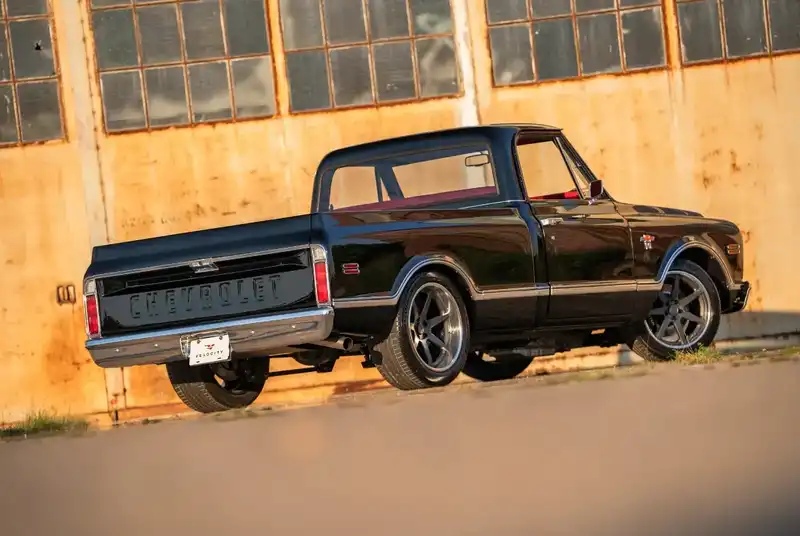 Street performance trucks—like this C10 from Velocity—are built for asphalt, combining high horsepower, lowered suspension, and sharp performance handling.
Unlike traditional work trucks or trail-focused builds, street performance trucks prioritize:
- Horsepower and torque
- Lowered, performance-calibrated suspension
- Upgraded braking systems
- Responsive handling
- Pavement-focused tires and stance
If a truck is engineered to dominate asphalt instead of dirt, it fits the category.
The best street performance trucks balance power with composure. They accelerate aggressively, corner with confidence, and remain usable in real-world driving. Some are factory-built performance models. Others are fully re-engineered custom builds built to a higher standard.
The Pre-Factory Era: Where It Started
Before manufacturers embraced the segment, street performance trucks were built by enthusiasts.
In the 1950s and 1960s, hot rodders began installing larger V8 engines into lightweight truck platforms. These early builds were about experimentation and speed, not trim packages or marketing.
Classic Chevy and Ford platforms became popular foundations. Builders lowered ride height, upgraded carburetion, improved airflow, and increased displacement. The objective was simple: create a truck that could outperform cars.
This grassroots movement laid the foundation for what would later become a recognized category.
The Muscle Car Wars and Their Influence
The horsepower battles of the late 1960s accelerated performance engineering across the industry.
Manufacturers like Ford Motor Company and General Motors pushed engine development, suspension tuning, and performance branding to new levels.
Although muscle cars were the headline act, their technology influenced trucks. High-output engines, improved braking systems, and stronger drivetrains made their way into pickups through both factory programs and aftermarket swaps.
The mindset shifted. A truck could be more than functional. It could be fast.
The Rise of Factory Street Performance Trucks
By the early 1990s, manufacturers introduced purpose-built street performance trucks.
The GMC Syclone delivered turbocharged acceleration that rivaled sports cars of its era.
Soon after, the Ford F-150 SVT Lightning proved that a lowered, performance-focused pickup could succeed at scale.
These trucks legitimized the segment. Street performance trucks were no longer niche experiments. They were engineered, marketed, and respected.
Engineering Evolution: From Mechanical to Modern
Street performance trucks evolved alongside automotive engineering.
- Fuel Injection and Electronic Controls: Electronic fuel injection improved reliability, throttle precision, and efficiency.
- Chassis and Suspension Development: Performance-tuned suspension systems replaced simple lowering kits. Engineers focused on balance, rigidity, and predictable handling.
- Forced Induction: Superchargers and turbochargers became common performance tools. Modern factory examples like the Ram 1500 TRX demonstrate how extreme output can coexist with daily drivability.
- Braking and Stability: Larger brake systems and advanced traction management allow modern street performance trucks to handle levels of power that earlier builds could not safely control.
Street Performance and Offroad: Understanding the Difference
The difference between street performance and offroad trucks comes down to intent.
Street performance trucks are tuned for pavement. They sit lower, corner flatter, and prioritize handling stability at speed.
Offroad trucks prioritize suspension travel, ground clearance, and terrain capability.
While some modern vehicles blur the lines between street performance and offroad capability, a true street performance truck is engineered with asphalt in mind.
What Makes the Best Street Performance Trucks?
The best street performance trucks share a few defining traits:
- Engineered suspension systems, not just lowered ride height
- Balanced horsepower that matches braking capability
- Reinforced chassis rigidity
- Predictable handling at highway speeds
- Cohesive design that supports performance goals
Power alone does not define the category. Execution does.
A properly engineered street performance truck feels composed, intentional, and confident under acceleration and braking.
The Decline and Revival
In the early 2000s, rising fuel costs and stricter emissions regulations slowed the segment. Efficiency became the dominant focus.
However, interest never disappeared.
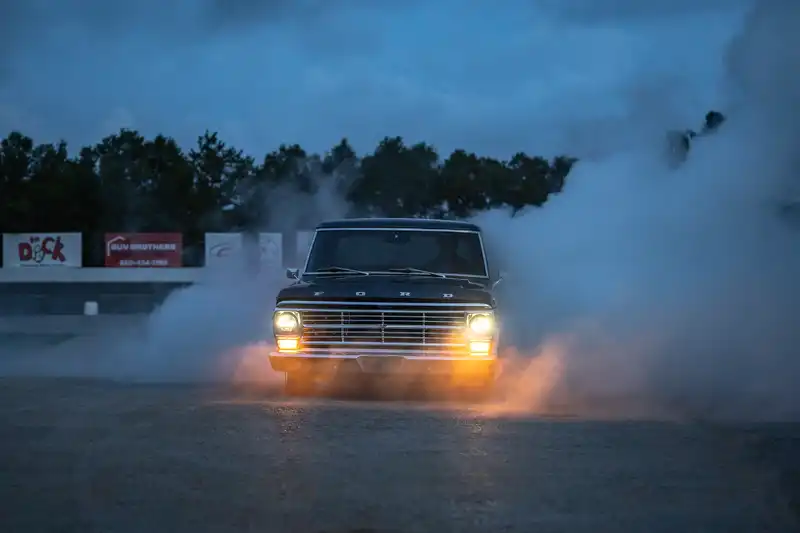 The street performance truck never disappeared. Today’s builds—like this Velocity F-100—aren’t just restored classics, they’re fully re-engineered for modern performance.
The revival introduced a new benchmark. Not simply restored. Fully re-engineered.
Legal, Registration, and Compliance Considerations
Street performance trucks must remain road compliant. That includes:
- Emissions compliance based on state regulations
- Proper VIN continuity and documentation
- Street-legal lighting and safety systems
- Insurance and agreed-value coverage
Modern professionally engineered builds are typically designed with compliance in mind. For buyers, documentation and build transparency matter just as much as horsepower.
Street performance should enhance drivability, not compromise legality.
What Are Street Performance Trucks Worth?
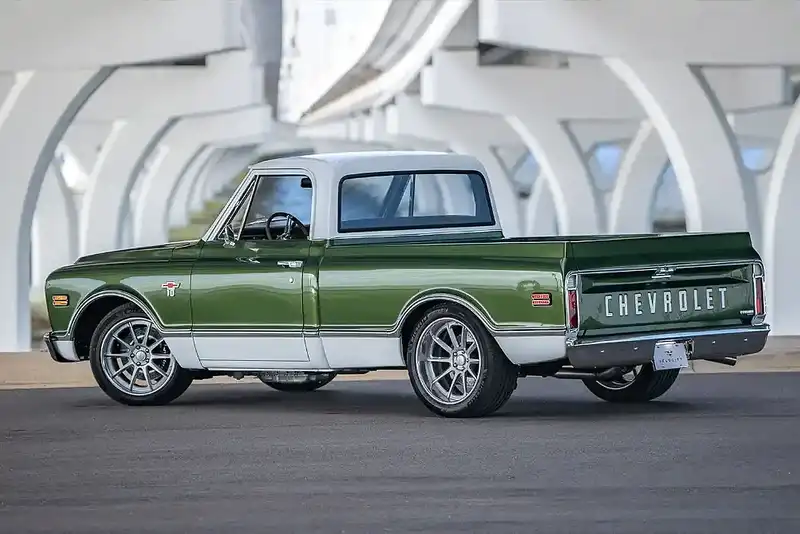 Street performance truck values depend on rarity, engineering quality, documentation, and overall build execution.
Value depends on:
- Production numbers
- Engineering depth
- Originality or build quality
- Documentation
- Market demand
Limited-production factory models often command strong resale value. Professionally built, fully re-engineered classic trucks can also achieve premium valuations when execution is consistent and documented.
What street performance trucks are worth ultimately reflects build quality and long-term desirability.
The Modern Chapter: Re-Engineered Street Performance
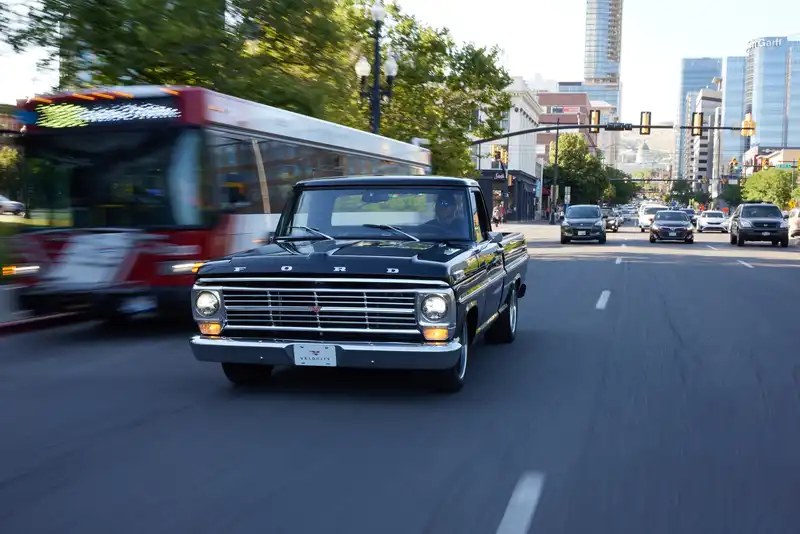 Velocity’s F-100 represents the modern chapter of street performance—classic design re-engineered with modern power, chassis engineering, and refined drivability.
Today’s enthusiast expects classic design with modern performance.
At Velocity, classic truck platforms are rebuilt from the foundation up with modern powertrains, performance-calibrated suspension systems, upgraded braking, and refined drivability standards that rival contemporary performance vehicles.
The result is a truck that respects its original silhouette while delivering modern composure.
This is not nostalgia. It is progression.
As factory performance trucks become increasingly mass-produced, there is growing demand for vehicles engineered with intention and built in limited numbers. Street performance has evolved. Expectations have evolved with it.
The Future of Street Performance Trucks
The future of street performance trucks will be defined by refinement.
Power must be usable. Handling must inspire confidence. Engineering must support performance, not simply advertise it.
The next era belongs to trucks that combine timeless design with contemporary engineering discipline.
Ready to Experience Modern Street Performance?
Explore what a fully re-engineered street performance truck can deliver.
Leave a Comment
This policy contains information about your privacy. By posting, you are declaring that you understand this policy:
This policy is subject to change at any time and without notice.
These terms and conditions contain rules about posting comments. By submitting a comment, you agree with these rules:
Failure to comply with these rules may result in being banned from submitting further comments.
These terms and conditions are subject to change at any time and without notice.
Comments