
Understanding the Classic Car Restoration Timeline
If you’ve ever wondered how long a restomod takes, the honest answer is: it depends.
A traditional classic car restoration timeline can stretch anywhere from several months to multiple years especially when craftsmanship, customization, and problem-solving are involved.
But not all builds follow the same path.
At Velocity, we’ve redefined the custom classic car build time delivering fully re-engineered vehicles in as little as 14 weeks with our industry-leading process. To understand why that matters, it helps to see what actually goes into a restomod build.
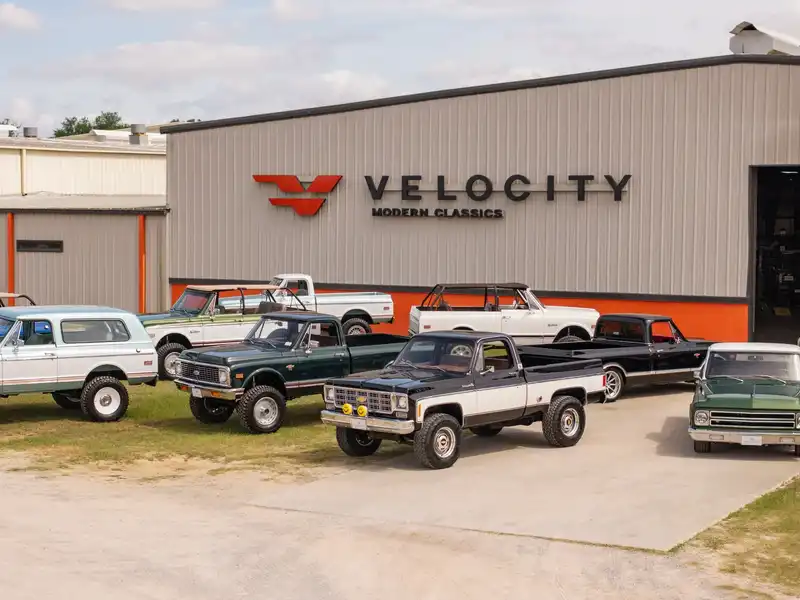 At Velocity, fully re-engineered classics in as little as 14 weeks—built with purpose, not shortcuts.
The Hidden Challenges Behind the Classic Car Restoration Timeline
Classic car restorations take time because every step is layered with complexity. Sourcing a viable donor vehicle alone can take months, and once secured, builders often face inconsistent or unavailable parts, requiring refurbishment or custom fabrication.
Skilled craftsmen capable of blending vintage platforms with modern engineering are limited, and each vehicle presents its own unique challenges, making standard timelines difficult to predict. Add to that the reality of work being spread across multiple shops, introducing delays and inconsistencies, along with the level of precision required to get every detail exactly right and it becomes clear why the typical classic car restoration timeline can extend well beyond expectations, shaping the true custom classic car build time.
Why Restomod Builds Take Time
A true restomod isn’t a refresh, it’s a reinvention.
Every system is rebuilt or replaced and every detail is reconsidered. And unlike modern vehicles, there’s no standardized starting point. Each donor vehicle brings its own history, quirks, and unknowns.
That’s why the typical answer to how long to restore a classic truck is often measured in phases and not just weeks.
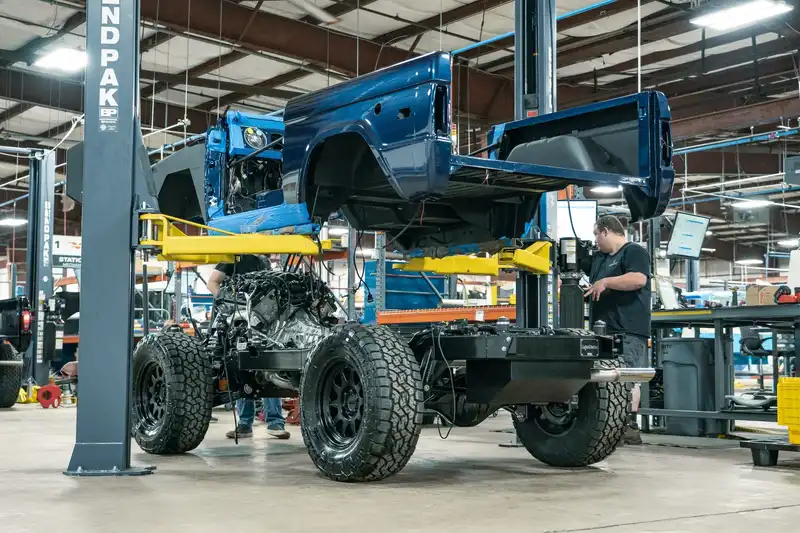 Every Velocity vehicle is reengineered from the ground up, with no two starting points the same.
Step 1: Sourcing and Evaluating the Donor Vehicle
The Foundation of the Classic Car Restoration Timeline
Every restomod begins with a donor vehicle, but not all donors are created equal.
Builders must locate a viable platform, assess structural integrity, and determine what can (or should) be retained. Rust, prior repairs, and hidden damage can all extend the classic car restoration timeline before the build even begins.
Typical timeframe: Weeks to months
Step 2: Disassembly and Inspection
Where the Real Story Begins
Once sourced, the vehicle is fully disassembled often down to the frame.
This phase reveals what wasn’t visible during evaluation. Components are cataloged, structural issues are identified, and the true scope of the build comes into focus.
Typical timeframe: Several weeks
Step 3: Chassis Engineering and Fabrication
Rebuilding the Platform from the Ground Up
Modern performance starts here. Whether modifying the original frame or installing a new chassis, this phase involves engineering for strength, geometry, and drivability. Suspension systems, braking components, and structural reinforcements are all integrated.
This is one of the most time-intensive parts of the custom classic car build time.
Typical timeframe: 1–3 months
Step 4: Bodywork and Paint
Precision Takes Patience
Bodywork is where craftsmanship becomes visible. Panels are repaired or replaced, gaps are aligned, and surfaces are refined to perfection. Then comes paint which often requires multiple stages of preparation, application, and curing.
This is a defining phase in the classic car restoration timeline, and one where rushing shows.
Typical timeframe: 1–2+ months
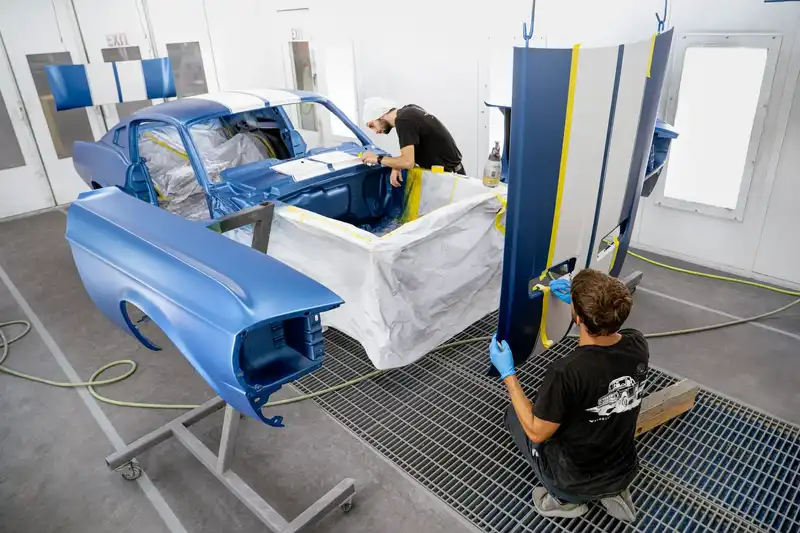 Bodywork and paint—where craftsmanship shows and precision takes time.
Step 5: Powertrain Installation
Modern Performance Meets Classic Design
With the foundation set, the powertrain is installed.
This includes fitting a modern engine, transmission, drivetrain, and cooling systems that often require custom integration to work seamlessly within a vintage platform.
Typical timeframe: Several weeks
Step 6: Interior Craftsmanship
Where Luxury Is Felt
The interior is entirely reimagined. From hand-stitched leather to custom seating, trim, and controls, this phase blends design with comfort and usability. Every material, stitch, and surface is intentional.
In this important step, the custom classic car build time can expand significantly depending on level of detail.
Typical timeframe: 1–2 months
Step 7: Electrical and Modern Technology
Bringing the Vehicle Into the Present
Modern vehicles rely on complex electrical systems and restomods are no different.
Wiring harnesses, lighting, infotainment, sensors, and integrations like backup cameras or climate control systems are installed and calibrated.
Done right, this phase is invisible to the eye, but essential to the overall driver’s experience.
Typical timeframe: Several weeks
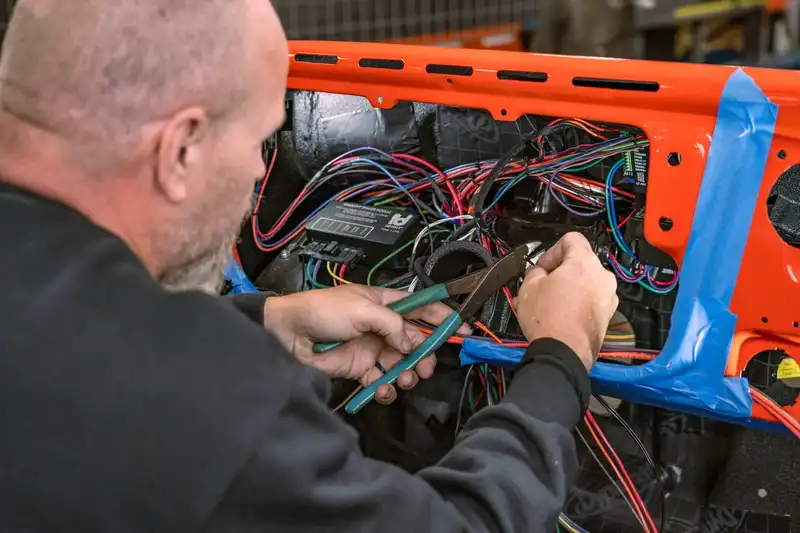 Electrical and tech—modern systems seamlessly integrated for a refined driving experience.
Step 8: Testing and Quality Control
Where Everything Comes Together
Before delivery, the vehicle undergoes extensive testing. Systems are validated and performance is refined. Any inconsistencies are addressed ensuring the vehicle doesn’t just look exceptional, but performs as intended.
This final stage is critical to maintaining quality across the entire classic car restoration timeline.
Typical timeframe: Several weeks
So, How Long Does It Take to Restore a Classic Vehicle?
When you add it all together, a traditional restomod build often takes:
- 6 months to 2+ years, depending on complexity, customization, and unforeseen challenges
That’s the reality behind most answers to:
- How long does a restomod take?
- What is the typical custom classic car build time?
The Velocity Difference
A New Standard for Custom Classic Car Build Time
Velocity approaches the build process differently.
Instead of building one vehicle at a time, we’ve engineered a proprietary, in-house production model where over 160 experts work in precise succession through our proprietary build process.
Every phase, from chassis engineering to interior craftsmanship, is completed with precision, consistency, and control.
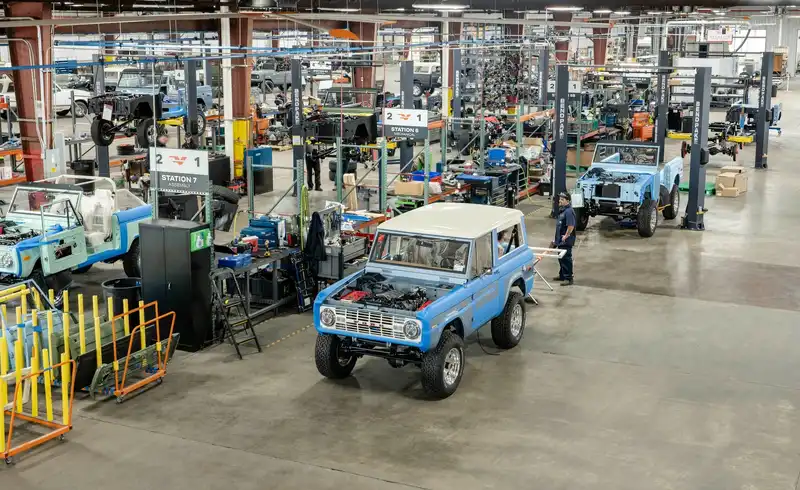 Over 160 experts, one streamlined process—engineering multiple builds with precision, not one at a time.
The result:
A fully re-engineered classic, delivered in as little as 14 weeks.
It’s not because we cut corners. We can deliver uncompromised quality in a reasonable timeframe because we’ve eliminated inefficiencies.
Final Thought: Time Is Part of the Story, But It Doesn’t Have to Define It
Understanding the classic car restoration timeline helps set expectations and appreciation for what goes into a true restomod.
But it also highlights what’s possible when the process is reimagined.
At Velocity, we’ve taken what once required years and refined it into something far more predictable, without compromising the outcome.
Leave a Comment
This policy contains information about your privacy. By posting, you are declaring that you understand this policy:
This policy is subject to change at any time and without notice.
These terms and conditions contain rules about posting comments. By submitting a comment, you agree with these rules:
Failure to comply with these rules may result in being banned from submitting further comments.
These terms and conditions are subject to change at any time and without notice.
Comments